
Engineering note: this guide is general information, not project-specific structural design. Use current product data, the applicable code and the responsible engineer’s assessment.
Protect the manufactured surface
GFRP bars rely on their composite body and external surface enhancement. Avoid dragging bundles, impact damage and abrasive lifting. Support long bundles at enough points to prevent excessive sag and follow the supplier’s handling instructions.
Inspect deliveries against the bar schedule and documentation. Segregate any bar with visible damage until the responsible quality or engineering representative decides its disposition.
Storage and site organisation
Store bundles off the ground on level supports, protect them from contamination and separate sizes and marks clearly. If outdoor storage is permitted, use opaque protection and follow the manufacturer’s temperature and ultraviolet-exposure guidance.
Keep welding, flame cutting and other high-temperature work away from exposed GFRP. Coordinate laydown, crane access and pour sequence before reinforcement arrives.
Cutting, tying and supporting
Use the cutting method and personal protective equipment stated by the manufacturer and site safety plan; glass-fibre dust and sharp fibres require control. Do not shear or flame-cut the composite as if it were steel.
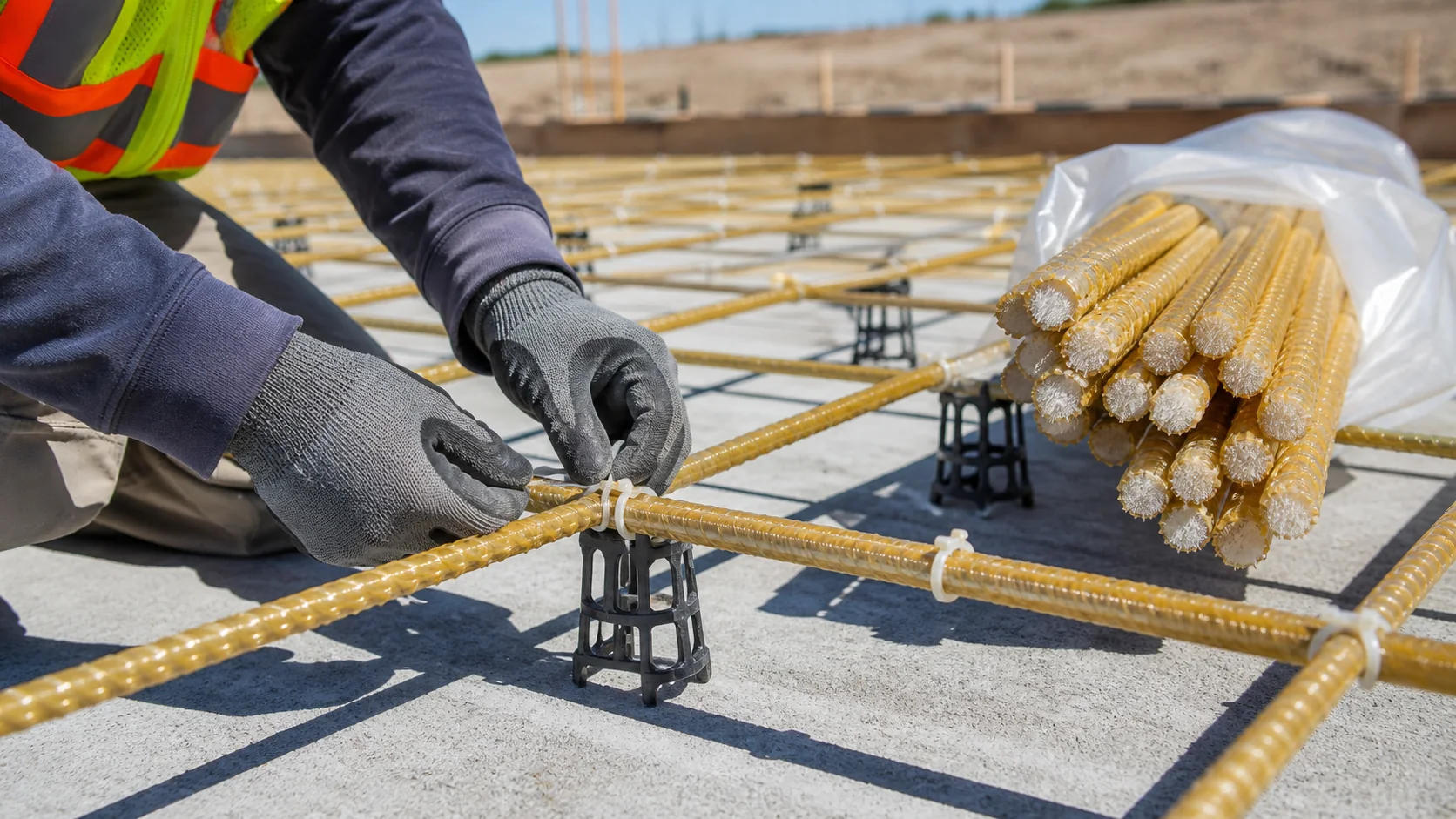
Use suitable non-corroding ties, chairs and supports where the project requires them. Prevent bars from floating during concrete placement and provide working platforms so workers and equipment do not directly load unsupported reinforcement.
Bent shapes must be planned
Cured GFRP should not be heat-bent in the field. Hooks, links, stirrups, U-bars and other shapes should be detailed, reviewed and manufactured in advance. Minimum bend geometry, dimensions and tolerances should follow the applicable product specification and approved shop information.
The best installation outcome begins before dispatch: coordinated drawings, bar marks, bundle labels, inspection requirements and a short site briefing.
- No field heat bending
- No welding or flame cutting near bars
- Protect the bond surface from abrasion
- Use approved supports and tie-downs
- Coordinate factory-made shapes early
- Record inspection and any nonconformance
Technical references
Use the latest edition applicable to the project. External references are provided for engineering context.
Hong Kong CEDD GFRP guidanceASTM D7957/D7957M