
Engineering note: this guide is general information, not project-specific structural design. Use current product data, the applicable code and the responsible engineer’s assessment.
Applications begin with exposure
GFRP is often considered where the environment threatens conventional reinforcement or where non-metallic properties solve a specific constraint. The case should be built around the structural element and its exposure rather than a generic list of industries.
FHWA documents and project resources show the established use of FRP technologies in bridge infrastructure. The applicable design, qualification and approval requirements must still be confirmed for each project.
Marine and coastal concrete
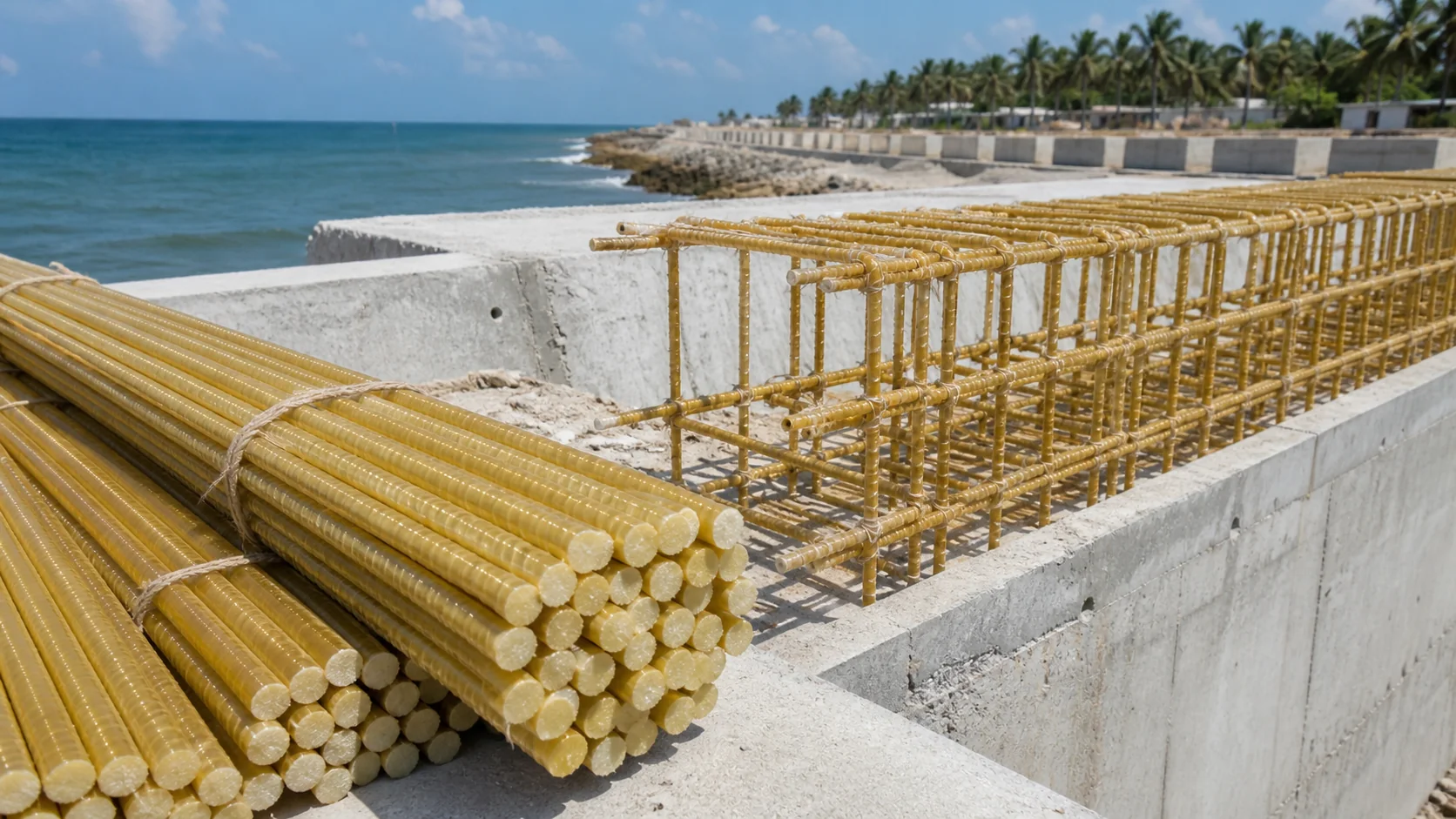
Seawalls, jetties, approach structures, splash zones and other chloride-exposed concrete can face repeated corrosion-driven maintenance. Because GFRP contains no steel, it does not undergo electrochemical rust. Engineers still need to design for load, serviceability, bond, durability reduction factors and the construction environment.
Bridges, roads and water infrastructure
Bridge decks, barriers, approach slabs, drainage works, tanks, channels, STPs and ETPs are common evaluation areas. Low reinforcement weight may simplify handling, while corrosion resistance may support the owner’s durability strategy.
For treatment facilities, the specific chemical and temperature environment should be stated. Resin system suitability and current test data matter; the broad label ‘chemical resistant’ is not enough for approval.
Industrial and specialist zones
Industrial floors, process structures, power infrastructure, MRI areas and electrical installations may benefit from non-magnetic or dielectric reinforcement. Tunnelling soft-eye zones can also evaluate cuttable composite reinforcement where the construction method calls for it.
These are specialist decisions. Confirm fire and temperature conditions, connections, anchorage, inspection access and the governing standard with the design team before procurement.
- Marine and coastal exposure
- Bridge decks and transport concrete
- Water and wastewater structures
- Industrial and chemical environments
- Non-magnetic and electrically sensitive zones
- Tunnelling and planned cutting zones
Technical references
Use the latest edition applicable to the project. External references are provided for engineering context.
FHWA FRP composite technologyACI CODE-440.11-22